
Heated Floors Under Tile: Benefits, Cost and Expert Tips
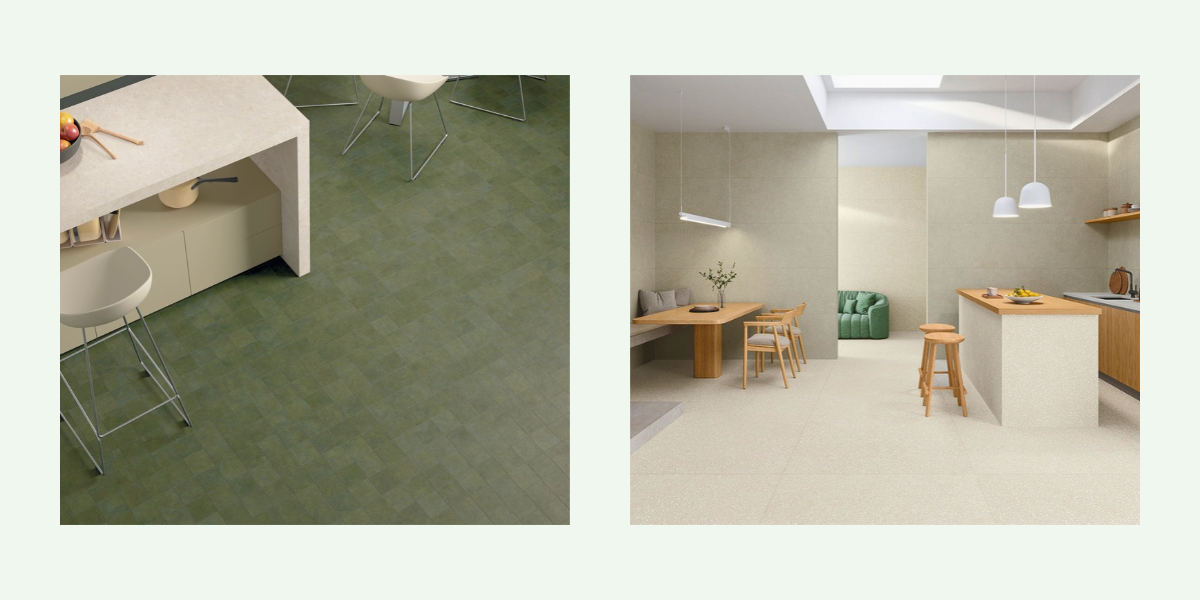
One November morning, you get out of bed, step onto the tile floor… and immediately pull your foot back. In the bathroom or kitchen, that cold surface can quickly take away from the comfort of your home.
Installing a heated floor under tile transforms that experience by providing gentle, comfortable warmth from the ground up. More accessible than you might think, radiant floor heating can be incorporated into many renovation projects and makes everyday living noticeably more comfortable.
Why install radiant floor heating under tile?
Ceramic tile, porcelain and natural stone are among the flooring materials best suited for radiant heating.
Thanks to their excellent thermal conductivity, these materials transfer heat efficiently from the heating system to the floor surface. Their ability to retain some of that warmth also contributes to a more comfortable indoor environment.
Pairing radiant floor heating with tile therefore offers a winning combination: a surface that stands up to wear and moisture, is easy to maintain and feels good underfoot, even during the coldest months of the year.
Still deciding between different flooring materials? Discover which flooring is best for radiant floor heating and compare your options.
Gentle, even warmth, right from the floor
Unlike traditional electric baseboards, which mainly heat the air near the walls, radiant floor heating distributes warmth directly from the floor.
This helps create a more even feeling of warmth across the heated surface and improves overall comfort in the room.
In most cases, floor heating is mainly there to warm the floor and works alongside the room’s main heating system. If you want it to heat the room on its own, have your heating needs assessed first so you can choose the right system.
Because the system is completely hidden beneath the flooring, it takes up no additional space and gives you greater freedom when planning the layout of the room.
Where can you install radiant floor heating under tile?
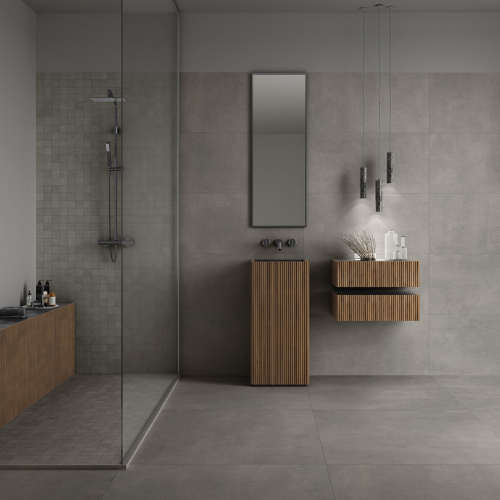
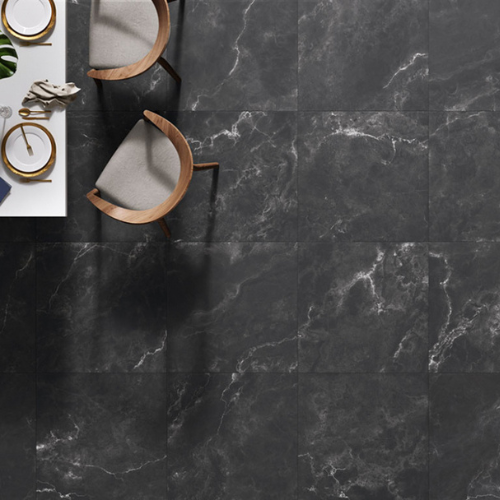
Radiant floor heating under tile is a great fit for rooms where the floor tends to feel cold or where you spend a lot of time.
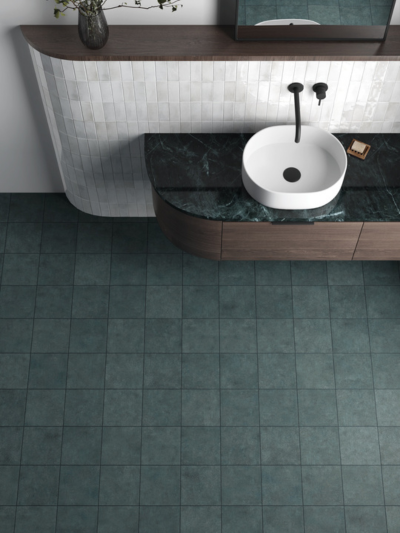
- In the bathroom: This is one of the most popular places for radiant floor heating. There’s nothing quite like stepping out of the shower onto a comfortably warm floor. Since bathrooms are generally smaller spaces, they can also be a great place to introduce radiant heating as part of a renovation.
- In the kitchen: Because you often spend long periods standing in the kitchen, a heated floor can make the space much more comfortable, especially when the room is located above a garage or another poorly heated area.
- In the entryway: During winter, floor heating can help moisture from boots and shoes dry more quickly, a real plus in busy entryways.
- In the basement: Tile installed over a concrete slab can feel particularly cold. Radiant heating can make the floor feel much more comfortable, provided the installation is properly adapted to the substrate and its insulation.
Radiant floor heating can also be considered for larger open-concept spaces. However, the size of the area, heating requirements and room layout should all be taken into account.
What determines the cost of radiant floor heating under tile?
The cost of a heated floor varies depending on the area being heated, the system selected and the specific requirements of the installation.
Although it represents an additional investment, adding radiant floor heating makes even more sense when you are already planning to replace your flooring.
Many of the steps involved are already part of a tile installation, including preparing the substrate, applying mortar and installing the new flooring.
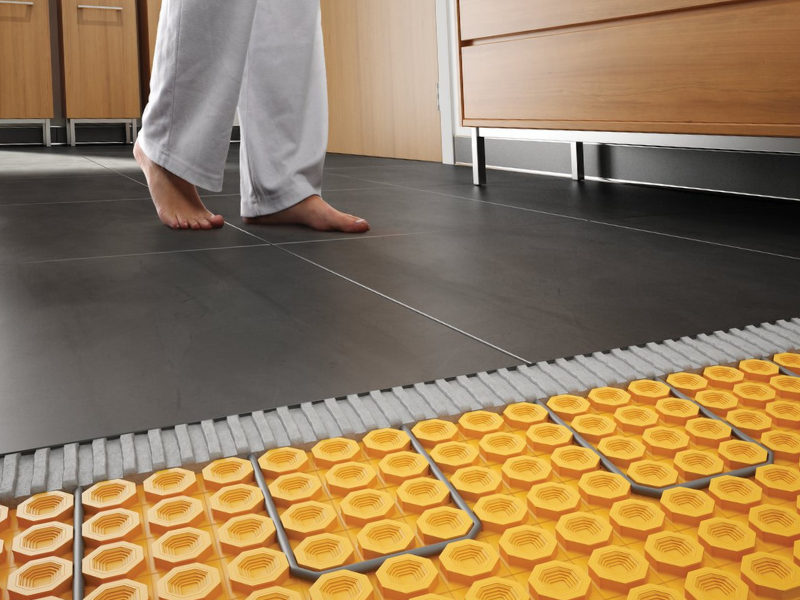
Some heating systems, like Schluter’s DITRA-HEAT, include an uncoupling membrane. It absorbs movement in the substrate and reduces the risk of cracks in the tile and grout, whether the heat is on or not.
What affects the cost?
Several factors should be considered when estimating the cost of your project:
- The actual heated area: Heating cables are generally installed only where heat is needed, while maintaining the required clearances around fixed elements.
- The system selected: The type of membrane, heating cables and thermostat all affect material costs.
- Subfloor preparation: If the existing floor requires repairs or additional preparation, this can increase the overall budget.
- Electrical work: The system and thermostat must be connected in accordance with applicable electrical requirements.
To get a realistic estimate, it is best to know the dimensions of the room and the location of fixed furniture before selecting your components.
Our tip: If you are already planning to replace your tile floor, this is a great time to consider adding radiant heating. Planning for it from the start can help you avoid having to remove perfectly good flooring a few years down the road.
What to know before installing radiant floor heating
Whether you are working on a new build or a renovation, a few important precautions can help you get the most out of your installation.
Estimate what your project requires
Would you like a better idea of the materials needed to install radiant floor heating?
With the Schluter DITRA-HEAT Estimator, you can calculate the area you plan to heat and get an estimate of the components required for your installation.
Access the DITRA-HEAT Estimator
This tool provides a preliminary material estimate and does not replace a personalized quote.
Can radiant floor heating be installed during a renovation?
Yes! Electric radiant heating systems can be incorporated into many renovation projects, or example when replacing an existing tile floor.
Before beginning the work, however, it is important to assess the condition of the existing substrate and account for the additional thickness of the system components.
On a concrete slab, for example, a membrane with built-in thermal insulation limits heat loss into the concrete and helps the floor warm up faster.
Calculate the heated area properly
This is a common mistake: assuming that the entire tiled surface needs to be heated.
Heating cables generally should not be installed under certain fixed elements, such as kitchen cabinets, islands or vanities without adequate air clearance. The minimum distances recommended by the system manufacturer must also be respected.
Would you also like to heat the floor inside your shower? This is possible with certain systems, provided the specific installation, waterproofing and electrical safety requirements are followed.
Mistakes to avoid during installation
Even a high-performance system can be disappointing if it is installed incorrectly. A few precautions are therefore essential:
- Never cut, cross or overlap heating cables.
- Test the cables’ resistance before, during and after installation to catch any damaged cable early.
- Respect the required curing times before turning on the heating system.
- Have the electrical connection completed by a qualified professional, in accordance with applicable regulations.
For example, Schluter recommends waiting at least seven days after grouting before operating its DITRA-HEAT system normally. For natural stone, allow a longer wait.
Everyday comfort that makes a real difference
Invisible and silent, radiant floor heating under tile is one of those upgrades you notice every morning.
Making your morning coffee without reaching for your slippers, taking your time getting ready in a comfortably heated bathroom or cooking without feeling the chill of the floor in the middle of winter: these small details can make your home feel noticeably more comfortable.
When properly planned, radiant floor heating is an investment in your home’s comfort that you’ll feel every day, especially in the rooms you use most.

Ready to say goodbye to cold floors?
Thinking about installing radiant floor heating in your bathroom, kitchen or basement?
Drop by one of our stores with your room dimensions and the location of built-in cabinets and fixtures. Our advisors will help you choose your tile and the right radiant heating components for your project.